
WiFi Extender vs Booster: Speed, Range & Performance
A slow or unstable WiFi connection can create problems during streaming, gaming, online meetings, and daily internet use. WiFi Extender vs Booster to understand which device can improve your home network. While both options help increase WiFi performance, they work in different ways. A WiFi extender focuses on expanding coverage, while a WiFi booster is a broader term used for different solutions that improve wireless signals. Choosing the right option depends on your home size, internet needs, and the areas where you experience weak signals.
What Is the Difference Between a WiFi Extender and a WiFi Booster?
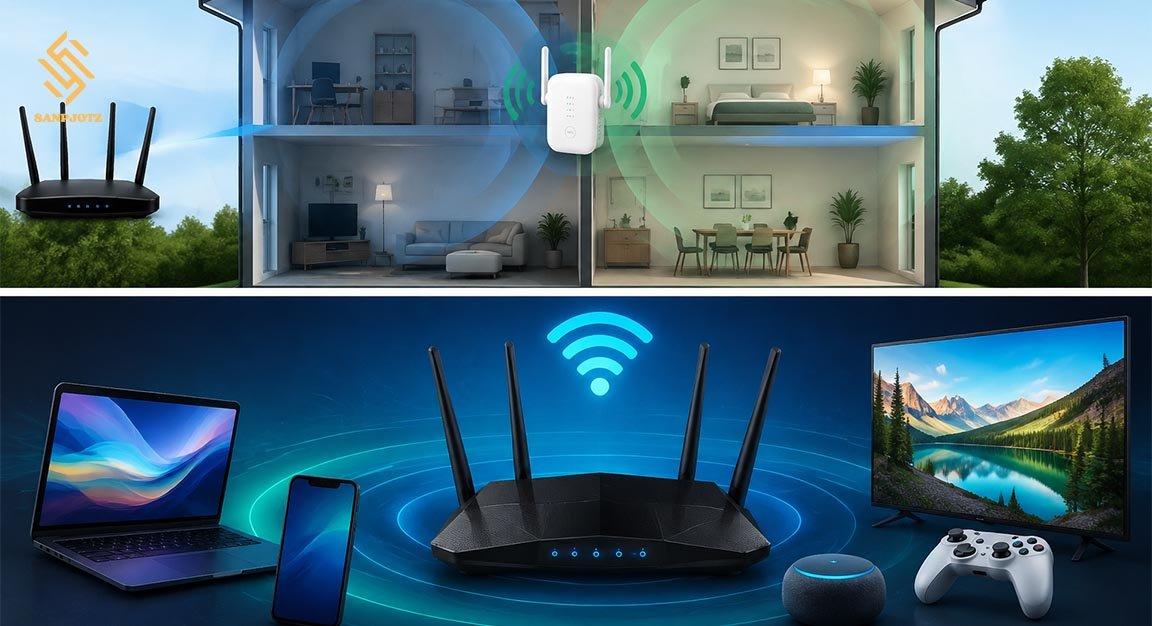
A WiFi extender is a device that takes the existing signal from your router and sends it to areas where the connection is weak. It helps remove dead zones, and WiFi Extender vs Booster allows devices in distant rooms to connect more easily. For example, if your router works well in the living room but struggles to reach a bedroom or office, an extender can help improve coverage.
A WiFi booster is a general term used for anything that improves WiFi performance. It can refer to a WiFi extender, mesh WiFi system, upgraded router, or other signal improvement technology. Because of this, many people use the terms extender and booster in the same way, even though a booster can include more types of solutions.
How Does a WiFi Extender Improve Wireless Coverage?
A WiFi extender works by receiving the signal from your main router and transmitting it again to a wider area. It does not create a new internet connection; instead, it extends the existing network so devices can connect from farther locations.
The placement of the extender plays an important role in performance. If it is placed too far from the router, it may receive a weak signal and provide poor results. A good position is usually an area where the router signal is still strong but close enough to the location that needs better coverage.
Modern extenders often support dual-band technology, WiFi 5, and WiFi 6, which help improve connection quality and reduce performance problems.
How Does a WiFi Booster Improve Network Performance?
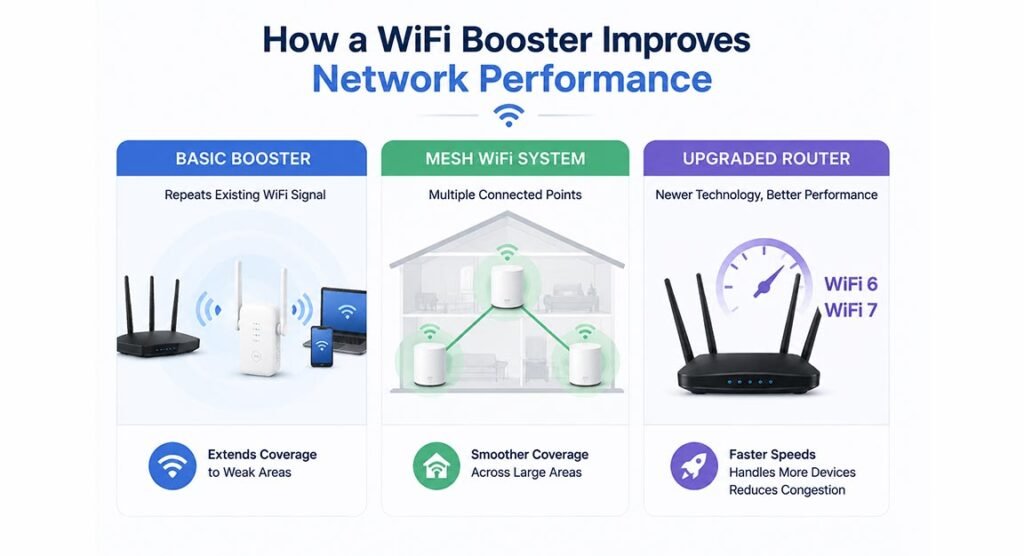
A WiFi booster improves wireless performance by strengthening or expanding your network. Since the term “booster” covers different technologies, the results depend on the type of device being used.
A basic booster may simply repeat the existing WiFi signal, while an advanced option like a mesh WiFi system creates multiple connected points throughout your home. Mesh systems are designed to provide smoother coverage and better performance across large areas.
Some users improve WiFi performance by replacing an old router with a newer model. Modern routers with WiFi 6 or WiFi 7 technology can handle more devices, provide faster speeds, and reduce network congestion.
WiFi Extender vs Booster: Which One Provides Better Speed?
When comparing WiFi Extender vs Booster, speed depends on the technology behind the device. A standard WiFi extender may reduce speed because it uses wireless bandwidth to receive and send information between the router and connected devices.
For example, if your router provides high-speed internet, the extender may deliver less speed depending on distance, interference, and the number of connected devices. The extender improves access in weak areas but does not increase the original internet speed.
A stronger booster solution, especially a mesh system, can often provide better speed because it manages connections more efficiently. This makes it more suitable for homes where users stream high-quality videos, play online games, or connect many smart devices.
WiFi Extender vs Booster: Which One Provides Better Range?
Range is a major factor when choosing between these solutions. A WiFi extender is usually effective for smaller coverage problems, such as improving WiFi in one room, a garage, or a home office.
For larger homes, multiple floors, or buildings with thick walls, a stronger booster solution may provide better results. A mesh WiFi system can cover larger areas because it uses multiple access points instead of relying on one repeated signal.
The final range depends on several conditions, including router location, wall thickness, wireless interference, and the quality of the equipment.
Which Option Performs Better for Streaming, Gaming, and Smart Devices?
Different online activities require different levels of network performance. Basic browsing and email use do not require very high speeds, so a simple WiFi extender may be enough.
Streaming services, online gaming, and video calls need a stable connection with low delay. A weak extender setup may cause buffering or lag if the signal between the router and extender is poor.
For homes with many connected devices, a better booster solution can provide smoother performance. Mesh WiFi systems are often preferred because they WiFi Extender vs Booster can manage multiple connections while maintaining stable coverage throughout the home.
When Should You Choose a WiFi Extender?
A WiFi extender is a practical choice for users who have a small or medium-sized home and only need improvement in specific areas. It is usually affordable and simple to install with most existing routers.
It is a good option when your current router provides good speed but cannot reach certain locations. For example, someone with a weak signal in an upstairs bedroom may only need an extender to improve coverage.
However, if your entire home has poor WiFi performance, an extender may not be enough. In that case, a more advanced solution may provide better long-term results.
When Is a WiFi Booster or Mesh System a Better Choice?
A complete WiFi booster solution is better for larger homes, offices, and users who need strong performance everywhere. If multiple people use the network for gaming, streaming, work meetings, and smart home devices, a stronger system can provide better reliability.
A mesh WiFi system is especially useful because it creates one connected network across different areas. Users can move around the home without manually changing networks.
Before buying a booster device, check your router age, WiFi Extender vs Booster, internet plan speed, and home layout. Sometimes improving router placement or upgrading outdated equipment can solve many connection problems.
Factors That Affect WiFi Speed and Performance
WiFi performance depends on more than just the extender or booster. Router placement, wireless frequency, and connected devices all affect your experience.
The 2.4 GHz frequency provides better range and works well through walls, but it usually offers slower speeds. The 5 GHz frequency provides faster speeds but works best at shorter distances.
Interference from other electronics, crowded wireless channels, and old networking equipment can also reduce performance. Keeping your router updated and placing it in an open central location can help improve your connection.
A good WiFi solution should match your home size, internet speed, and daily usage habits.
FAQs
Is a WiFi extender the same as a WiFi booster?
A WiFi extender is one type of WiFi booster, but a booster can also include mesh systems and router upgrades.
Can a WiFi extender make my internet faster?
No, it improves coverage but does not increase the speed provided by your internet provider.
Which is better for a large home?
A mesh WiFi booster system is usually better because it provides wider and more stable coverage.
Why is my WiFi extender slow?
Slow performance can happen because of poor placement, weak router signals, interference, or too many connected devices.
How can I improve my WiFi range?
Place your router in a central location, reduce interference, and choose the right extender or booster for your home size.