
How to Become an Xray Tech: Degree to Certification
How to Become an Xray Tech is a common question for people who want a healthcare career without spending many years in medical school. X-ray techs, also called radiologic technologists or radiographers, take images of bones, organs, and other body parts. Doctors use these images to find injuries and health problems. In the United States, the normal path includes education, clinical training, certification, and sometimes a state license.
What Does an Xray Tech Do?
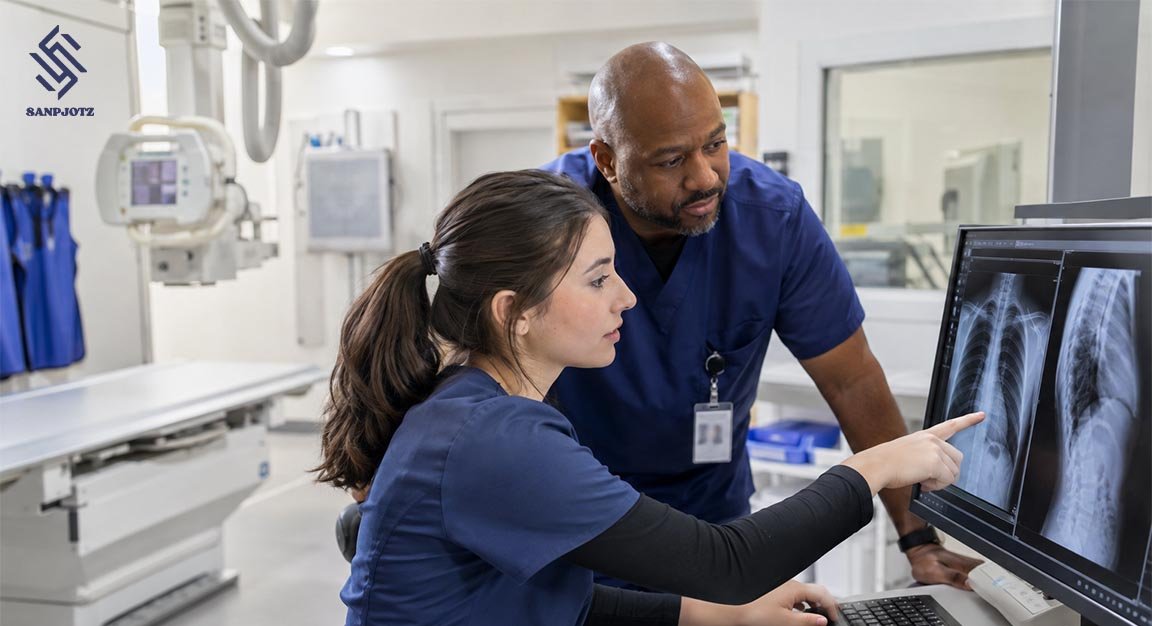
An X-ray tech works with patients and medical imaging equipment. The technologist explains the procedure, places the patient in the correct position, chooses suitable equipment settings, and creates clear X-ray images. These images are then checked by doctors or radiologists when they need to diagnose an illness or injury.
The job also includes patient safety. Techs must limit unnecessary radiation exposure and follow correct safety procedures. They may work with patients who are injured, elderly, nervous, or unable to move easily. According to ARRT, radiographers create images of bones, soft tissues, and internal organs and may also assist during special imaging procedures.
What Education Do You Need to Become an Xray Tech?
The education stage is one of the most important parts of How to Become an Xray Tech. Students normally begin with a high school diploma or GED. Biology, anatomy, mathematics, chemistry, and physics can provide useful preparation before entering college.
Most future radiologic technologists complete an associate degree, which usually takes about two academic years. The U.S. Bureau of Labor Statistics also lists an associate degree as the typical entry-level education for radiologic technologists.
For the ARRT primary pathway, candidates must have an associate degree or higher and complete an ARRT-approved education program. The degree itself does not have to be in radiologic science, but it must come from an institution recognized by ARRT. The degree must also be earned before taking the ARRT examination.
How to Choose the Right Radiography Program
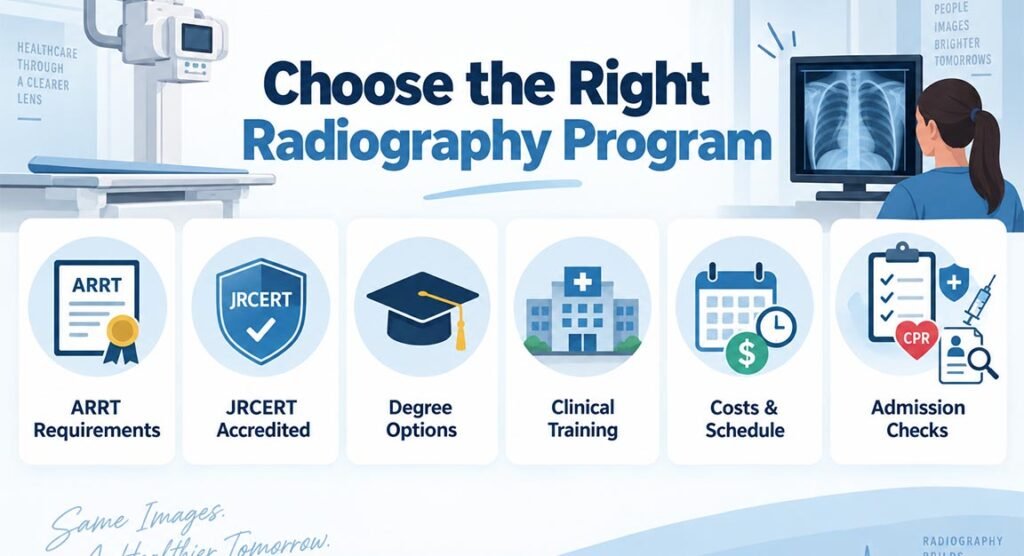
Choosing a suitable school can affect your education, certification eligibility, and future employment. Before paying tuition, check whether the radiography program meets ARRT education requirements. Do not choose a school only because it promises fast training or low tuition.
Students can also check programs accredited by the Joint Review Committee on Education in Radiologic Technology (JRCERT). Study format. Available options can include associate degrees, bachelor’s degrees, and some certificate programs.
Compare tuition, graduation rates, clinical locations, class schedules, certification exam performance, and admission requirements. Some programs require prerequisite subjects, health checks, vaccinations, CPR training, background screening, or drug testing before clinical work begins.
What You Learn During Xray Tech Training
Students How to Become an Xray Tech should understand that the course involves both science and patient care. Common subjects include anatomy, physiology, medical terminology, radiation physics, image production, patient positioning, radiation protection, pathology, and medical ethics.
Students also learn how digital imaging systems work. They need to understand why an image may be too light, too dark, blurred, or incorrectly positioned. Good image quality is important because a poor image can make diagnosis harder and may require another exposure.
Radiation safety is another major part of training. Students learn how to use the correct exposure, reduce unnecessary radiation, protect patients, and safely operate imaging equipment. These skills are important for both the patient and the healthcare worker.
How Clinical Training Works for Xray Tech Students
Radiography cannot be learned only from books or online lessons. Students need hands-on clinical experience. Clinical education usually takes place in hospitals, imaging centers, clinics, or other approved healthcare settings.
Students work under supervision while learning how to perform different examinations. They may practice chest, spine, abdomen, arm, leg, shoulder, pelvis, and trauma imaging. They also learn how to communicate with patients and safely move people who have injuries or limited movement.
ARRT requires students in approved programs to complete both didactic and clinical competencies. Clinical competencies show that the student can perform required procedures safely and correctly, either with patients or, where permitted, in approved simulated settings.
How to Get ARRT Certified as an Xray Tech
Certification is a major step in How to Become an Xray Tech. The American Registry of Radiologic Technologists (ARRT) has three main requirements under its primary eligibility pathway: education, ethics, and examination.
First, the candidate must finish an approved radiography education program and meet the degree requirement. The candidate must also meet ARRT’s ethics standards. After these requirements are satisfied, the student can apply for and take the ARRT Radiography examination.
The exam tests knowledge needed for entry-level professional practice. Subjects include areas such as patient care, safety, image production, and radiographic procedures. Candidates should use the current ARRT examination content specifications because requirements can change as medical technology develops.
After passing the required exam and meeting all other conditions, a radiographer can earn the ARRT credential commonly shown as R.T.®(ARRT).
Do Xray Techs Need a State License?
Certification and licensing are not exactly the same. ARRT certification is a professional credential, while a state license gives legal permission to work under the rules of a particular state.
The Bureau of Labor Statistics reports that most states require radiologic technologists to be licensed or certified. Employers also commonly require or prefer certified technologists even where state rules are different.
For this reason, students should contact their state licensing agency before applying for jobs. Requirements may include an ARRT credential, an examination, an application, fees, background checks, or continuing education.
How Long Does It Take to Become an Xray Tech?
When planning How to Become an Xray Tech, expect the main education route to take around two years or more. An associate degree radiography program commonly takes about two academic years, but prerequisites and admission waiting periods can increase the total time.
A bachelor’s degree usually takes around four years. Certification and state licensing can add more time after graduation. The exact timeline therefore depends on your college, previous education, clinical requirements, exam schedule, and state rules.
Students should also consider the cost of tuition, books, uniforms, transportation, clinical travel, health screenings, CPR certification, examinations, and licensing. Community colleges can often provide a more affordable route than private schools.
Xray Tech Salary, Job Outlook, and Career Growth
Radiologic technology can offer strong career opportunities. According to the U.S. Bureau of Labor Statistics, radiologic technologists and technicians had a median annual wage of $80,110 in May 2025. Actual income can be higher or lower depending on experience, location, employer, shifts, and additional certifications.
Employment of radiologic and MRI technologists is projected to grow 5% between 2025 and 2035, with about 15,300 openings per year on average.
Radiography can also be a starting point for advanced medical imaging. After gaining experience and meeting additional requirements, some professionals move into CT, MRI, mammography, bone densitometry, or interventional radiography. These skills can increase career choices and may also improve earning potential.
Learning How to Become an Xray Tech means understanding the complete path, not only earning a degree. You need the right education, practical clinical skills, professional certification, and any license required by your state. For people who enjoy healthcare, technology, and helping patients, radiography can offer a practical and rewarding long-term career.
FAQs
How many years does it take to become an Xray Tech?
Many students need about two years for an associate-level radiography program. Prerequisites, certification, and licensing can make the total process longer.
Do you need a degree to work as an Xray Tech?
For the ARRT primary Radiography pathway, you need an associate degree or higher and must complete an approved professional education program.
Is the ARRT exam required?
ARRT candidates seeking the Radiography credential through the primary pathway must meet education, ethics, and examination requirements.
Can Xray Tech training be completed online?
Some classroom subjects may be offered online, but students still need supervised clinical training to develop practical imaging and patient-care skills.
Is Xray Tech a good career?
It can be a good choice for people interested in healthcare and technology. BLS projects 5% growth for radiologic and MRI technologists from 2025 to 2035.