

How to Build Resilience for a Stronger Mind
Life can bring stress, failure, loss, change, and unexpected problems. These experiences can affect our confidence and make daily life harder. Learning How to Build Resilience helps you deal with difficult moments without losing direction. Resilience does not mean that you never feel sad, worried, or tired. It means learning healthy ways to recover, adapt, and continue moving forward. With practice, supportive people, and simple daily habits, anyone can develop a stronger and more flexible mind.
What Resilience Means and Why It Matters
Resilience is the ability to adapt after stress, failure, or a difficult experience. A resilient person still feels normal emotions such as sadness, fear, or disappointment. The difference is that these feelings do not permanently stop them from moving forward. They slowly understand the situation, find support, and decide what they can do next.
Resilience is important because problems are a normal part of life. You cannot control every event, but you can improve the way you respond. Strong resilience can help you manage pressure, make clearer decisions, and recover after setbacks. It is not a fixed quality that only some people have. Resilience skills can be developed through regular practice and experience.
How to Build Resilience Through Daily Habits
Understanding How to Build Resilience starts with small habits rather than one major change. A regular routine gives your day structure when other parts of life feel uncertain. Try to wake up and sleep at similar times, eat regular meals, complete important tasks, and make space for activities you enjoy.
Small positive habits can become a strong support system over time. You might write down three things you are thankful for, spend ten minutes outside, read, speak with a friend, or plan tomorrow’s tasks. Do not try to change everything at once. Choose one useful habit and practise it regularly until it becomes part of your normal routine.
Manage Stress Without Feeling Overwhelmed
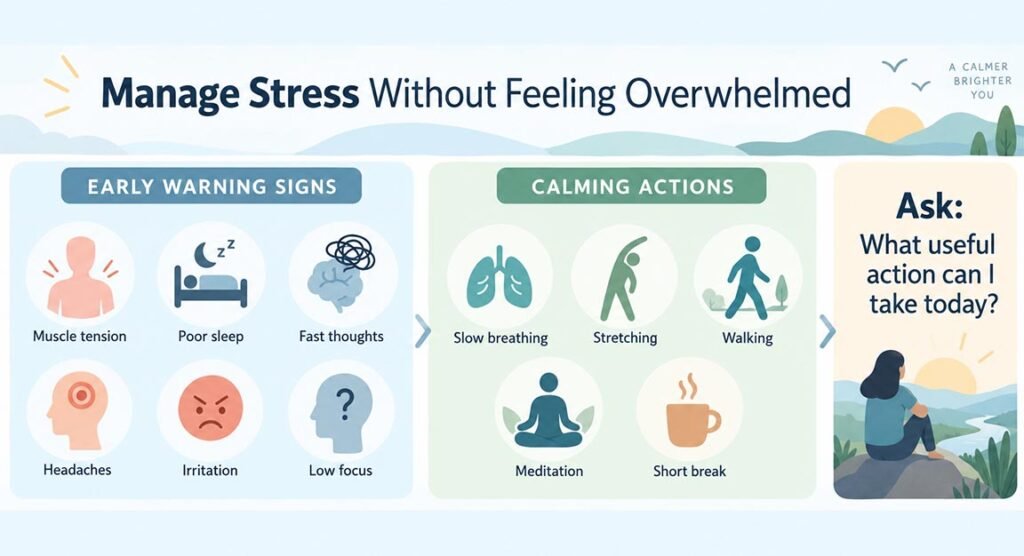
Stress is a natural response to difficult situations, but long-term stress can make clear thinking harder. Notice early warning signs such as muscle tension, poor sleep, fast thoughts, headaches, irritation, or difficulty concentrating. Recognizing these signals gives you a chance to respond before stress becomes too strong.
Simple relaxation methods can help. Slow breathing, stretching, walking, meditation, or taking a short break may calm your body and mind. You should also separate problems you can control from problems you cannot. Instead of worrying about everything, ask, “What useful action can I take today?” A small action often feels more manageable than trying to solve the whole problem immediately.
Build Strong Relationships and Ask for Support
Strong relationships are a major part of learning How to Build Resilience. People do not need to deal with every difficult experience alone. Trusted friends, family members, colleagues, community groups, or professionals can provide emotional support and practical advice when life becomes difficult.
Try to stay connected even when stress makes you want to withdraw. Talking about a problem can help you understand it from a different view. You do not need a large social circle. A few safe, respectful, and supportive relationships can make a real difference. Asking for help is not a sign of weakness. In many situations, it is a practical and responsible choice.
Train Your Mind to Handle Negative Thoughts
Negative thoughts often become stronger during stressful periods. After one mistake, you may think, “I always fail,” or “Nothing will improve.” These thoughts can make one difficult event feel like a permanent problem. Try to replace extreme thoughts with statements that are more balanced and based on facts.
For example, change “I cannot do this” to “This is difficult, but I can learn what to do next.” This does not mean ignoring real problems or pretending to be happy. It means looking at the complete situation. Mindfulness can also help you notice thoughts without immediately believing or reacting to every one of them.
Set Small Goals and Improve Problem-Solving Skills
Another part of How to Build Resilience is learning to break large problems into smaller steps. A serious problem can feel impossible when you try to solve everything at the same time. Instead, identify the main issue and choose one realistic step that you can complete.
For example, if you lose a job, your first goal does not need to be finding the perfect new career. You might first update your CV, contact someone in your field, and apply for one suitable position. Small achievements create progress and confidence. If one solution does not work, review what happened and try a different approach instead of treating it as final failure.
Use Sleep, Exercise, and Self-Care to Stay Mentally Strong
Your mental and physical health are closely connected. Poor sleep can make emotions harder to control, while regular rest helps the brain recover. Try to keep a steady bedtime, reduce unnecessary screen use before sleep, and create a calm sleeping environment when possible.
Physical activity is useful too. Walking, cycling, stretching, swimming, or other enjoyable exercise can reduce physical tension and support general wellbeing. Eating balanced meals and giving yourself time to rest are also important. Self-care is not selfish or lazy. It helps provide the physical energy needed to deal with stress, responsibilities, and difficult situations.
Learn From Failure, Change, and Difficult Experiences
Learning How to Build Resilience also means changing the way you understand failure. A rejected application, failed exam, broken plan, or business mistake can hurt your confidence. However, one unsuccessful result does not decide your full future.
Ask what the experience can teach you. Maybe you need more preparation, better information, extra practice, or another strategy. Change is also unavoidable. Jobs, relationships, plans, and responsibilities can change over time. Resilience means accepting the new reality and adapting your response, rather than spending all your energy wishing that nothing had changed.
Create a Personal Resilience Plan That Works
A personal resilience plan gives you simple actions to follow during difficult times. Start by identifying two or three people you trust. Add healthy activities that help you feel calm, such as walking, reading, exercise, prayer, meditation, creative work, or spending time outdoors.
Your plan should also include realistic goals, ways to manage stress, and reminders about what you can control. Think about past challenges and identify what helped you before. Your plan can change as your life changes. The purpose is not to remove every problem but to give you healthy tools, support, and direction when challenges appear.
When Professional Support Can Help
Sometimes personal habits and support from friends are not enough. If stress, sadness, fear, or another difficult experience continues to affect your sleep, work, relationships, or normal daily activities, consider speaking with a qualified health or mental health professional.
Professional support can help you understand difficult emotions and develop healthier coping methods. Getting help does not mean that you have failed at being resilient. Knowing when you need additional support is itself an important life skill. A stronger mind is not a mind that never struggles; it is one that knows how and when to recover.
FAQs
Is resilience something you are born with?
Not completely. Some people may naturally manage stress differently, but resilience can be learned and strengthened through experience, healthy habits, relationships, and coping skills.
How long does it take to become more resilient?
There is no fixed time. Small improvements may appear as you practise healthy habits, but resilience normally develops gradually through repeated experiences and regular practice.
Can exercise improve resilience?
Yes. Regular physical activity can support mood, sleep, stress control, and general wellbeing. Even simple activities such as walking or stretching can be useful.
Does being resilient mean ignoring emotions?
No. Resilience means recognizing difficult emotions and responding to them in a healthy way. Sadness, fear, anger, and disappointment are normal human emotions.
What is the easiest way to start building resilience?
Start with one small change. Improve your daily routine, talk with someone you trust, set a manageable goal, or practise a simple stress-management method.