

Cloud Security Monitoring: Protect Your Digital Assets
Cloud Security Monitoring has become a critical part of modern cybersecurity because businesses now store applications, customer information, financial records, and sensitive data in cloud environments. As cloud adoption grows, attackers are constantly searching for weaknesses such as stolen credentials, misconfigured systems, and unauthorized access points. A strong monitoring strategy helps organizations identify risks early, protect valuable digital assets, and maintain a secure cloud environment.
Why it Is Essential for Protecting Digital Assets
Modern businesses depend on cloud platforms for daily operations, but this flexibility also creates new security challenges. Without proper visibility, organizations may not know when suspicious activities occur inside their cloud infrastructure. Security teams need continuous awareness of user actions, system changes, and network behavior.
Cloud Security Monitoring provides real-time observation of cloud resources and helps detect threats before they cause serious damage. It protects important assets such as databases, applications, intellectual property, and customer information by identifying unusual behavior and security weaknesses.
A major benefit of monitoring is faster response. When a potential attack is discovered quickly, businesses can block unauthorized access, reduce downtime, and prevent data loss. This makes cloud monitoring an important security layer for companies of all sizes.
How Cloud Security Monitoring Works in Modern Cloud Environments
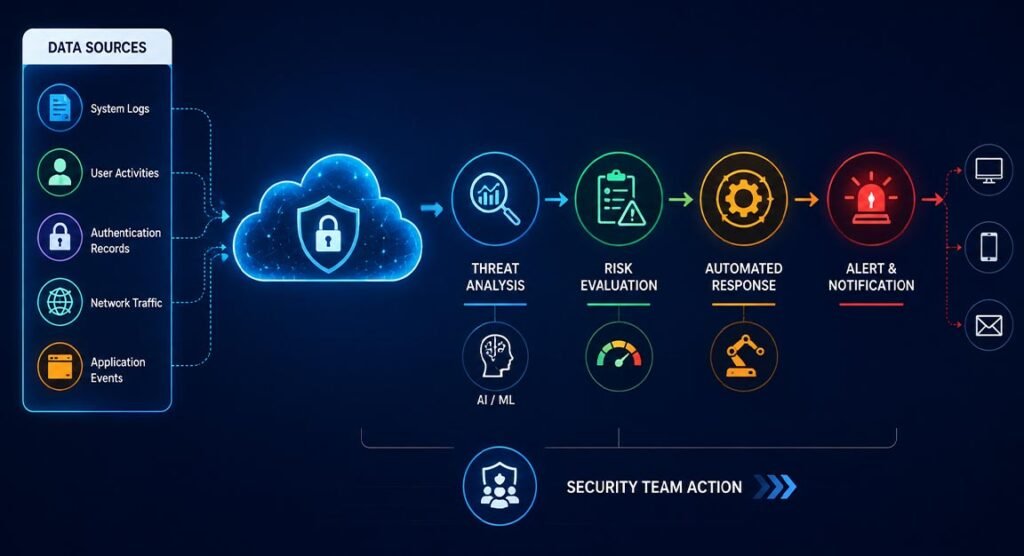
Cloud environments generate large amounts of security data every second. Monitoring solutions collect information from different sources, including system logs, user activities, authentication records, network traffic, and application events. This information is analyzed to identify possible threats.
Security monitoring uses advanced technologies such as Artificial Intelligence (AI), Machine Learning (ML), and behavioral analytics to recognize unusual patterns. For example, if an employee account suddenly accesses thousands of files from an unknown location, the system can create an alert for investigation.
The process usually includes data collection, threat analysis, risk evaluation, and automated response. These steps allow security teams to understand what is happening inside their cloud environment and take action quickly when problems appear.
Key Components of an Effective Cloud Security Monitoring Strategy
A successful cloud protection plan includes several important security components. Security Information and Event Management (SIEM) systems collect and analyze security events from multiple cloud services. They help teams identify threats and investigate incidents from one central location.
Another important technology is Cloud Security Posture Management (CSPM). CSPM tools check cloud configurations and find security problems such Cloud Security Monitoring as exposed storage, weak permissions, and incorrect settings. These tools help organizations maintain secure cloud practices.
Identity protection is also essential. Identity and Access Management (IAM) monitoring tracks user permissions, login behavior, and account activities. It prevents unauthorized users from gaining access to sensitive cloud resources.
Common Cloud Security Threats Detected Through Monitoring
Cloud environments face many types of cyber threats. One of the most common risks is data breaches, where attackers gain access to confidential information. Monitoring systems help identify unusual data movement, suspicious downloads, and unauthorized access attempts.
Another major threat is account hijacking. Cybercriminals often steal passwords or access tokens to control cloud accounts. Monitoring solutions detect strange login locations, repeated failed attempts, and abnormal account behavior.
Cloud misconfiguration is also a serious problem. Incorrect settings can accidentally expose databases, applications, or storage systems to the public. Regular monitoring helps identify these weaknesses and allows teams to correct them before attackers exploit them.
How it Prevents Data Breaches and Unauthorized Access
Preventing data breaches requires continuous security awareness. Cloud monitoring tools examine activities across cloud systems and compare them with normal behavior patterns. When something unusual happens, security teams receive alerts and can respond immediately.
For example, a monitoring system may detect a user attempting to access restricted files or changing important security settings without approval. These actions can indicate insider threats or compromised accounts.
Many organizations also combine monitoring with Zero Trust Security, a model based on verifying every user and device before granting access. This approach reduces risks by ensuring that no connection is automatically trusted.
Best Practices for Improving Cloud Security Monitoring
Organizations can improve their security monitoring by following several proven practices. First, businesses should enable continuous monitoring because cyber threats can happen at any time. Regular visibility helps detect problems before they become major incidents.
Strong access controls are also necessary. Companies should use Multi-Factor Authentication (MFA), least-privilege permissions, and regular access reviews to reduce unauthorized access risks.
Another important practice is updating security policies regularly. Cloud environments change frequently, so organizations should review configurations, monitor new resources, and remove unnecessary permissions.
Security teams should also create clear incident response plans. A well-prepared response process helps businesses handle attacks faster and reduce financial and operational damage.
Cloud Security Monitoring Tools and Technologies Businesses Use
Many organizations use specialized tools to strengthen their cloud security. Cloud providers offer built-in security solutions such as Amazon GuardDuty, Microsoft Defender for Cloud, and Google Security Command Center.
Third-party platforms provide additional monitoring capabilities, including threat intelligence, compliance reporting, vulnerability detection, and automated response features.
Modern security tools combine multiple technologies to provide better protection. They analyze large volumes of security information, identify potential threats, and support security teams in making faster decisions.
Choosing the right monitoring solution depends on business needs, cloud architecture, compliance requirements, and the sensitivity of stored information.
Challenges Organizations Face When Implementing it
Although cloud monitoring provides many benefits, organizations may face challenges during implementation. One common problem is managing large amounts of security data. Cloud systems produce thousands of events, making it difficult for teams to identify important threats.
Another challenge is the complexity of multi-cloud environments. Businesses often use different cloud providers, applications, and services, which can make security management more difficult.
A shortage of skilled cybersecurity professionals is another concern. Effective monitoring requires experts who understand cloud technologies, security operations, and threat detection methods.
Organizations can overcome these challenges by using automation, improving employee training, and selecting security tools that match their technical requirements.
The Future of Cloud Security Monitoring With AI and Automation
The future of cloud protection will depend heavily on automation and intelligent security technologies. Artificial Intelligence and Machine Learning will continue improving threat detection by identifying complex attack patterns faster than traditional methods.
Automated security responses will also become more common. Systems will be able to block suspicious activities, isolate threats, and protect sensitive resources with minimal human involvement.
As businesses continue moving to cloud platforms, security monitoring will remain a necessary investment. Companies that adopt advanced monitoring strategies will be better prepared to protect digital assets, maintain customer trust, and support long-term growth.
FAQs
What is it?
Cloud Security Monitoring is the process of continuously tracking cloud activities, detecting threats, and protecting cloud-based data, applications, and infrastructure from security risks.
Why is it important?
It helps businesses detect cyber threats early, prevent unauthorized access, protect sensitive information, and maintain compliance with security standards.
What threats can Cloud Security Monitoring detect?
It can detect data breaches, account hijacking, malware attacks, insider threats, suspicious logins, and cloud misconfigurations.
Which technologies are used?
Common technologies include SIEM, CSPM, IAM monitoring, AI-based threat detection, and cloud-native security tools.
How can businesses improve?
Businesses can improve security by using MFA, monitoring continuously, reviewing permissions, updating configurations, and creating strong incident response plans.