
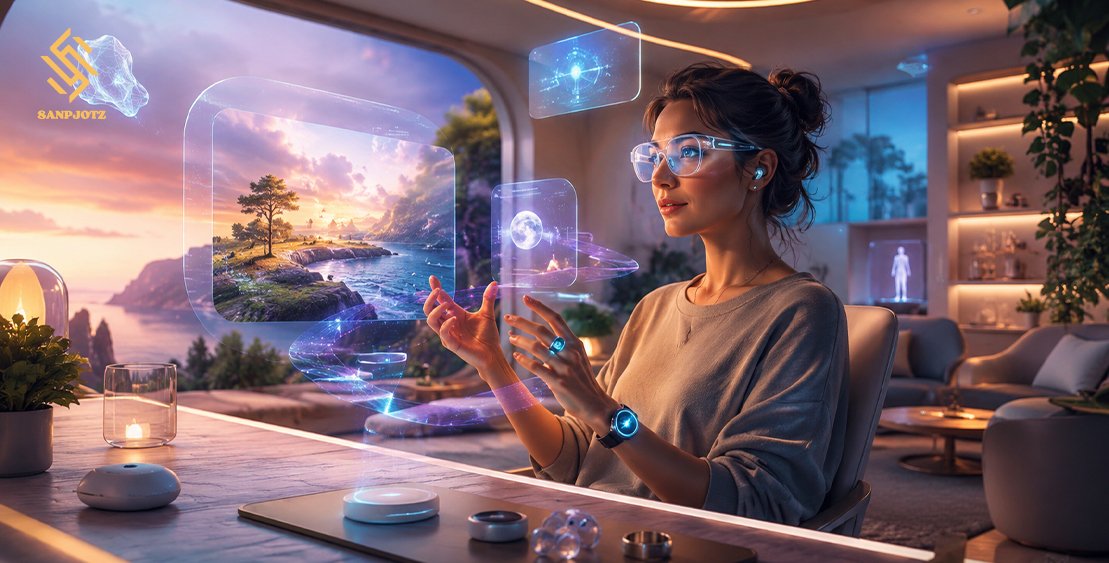
Tech Giants Envision Future Beyond Smartphones and Mobile Devices
For years, the smartphone has been the main tool for communication, work, shopping, entertainment, and navigation. Now, Tech Giants Envision Future Beyond Smartphones by developing devices that can work around the body and understand the physical world. Smart glasses, AI assistants, headsets, watches, rings, and earbuds may help people complete daily tasks without constantly touching a phone screen.
Why Technology Companies Are Looking Past the Smartphone
Smartphones are still powerful and popular, but the market has become mature. New models often bring better cameras, faster processors, or brighter screens, yet the basic experience remains similar. Users still unlock a device, find an app, and tap the screen to complete a task.
This is why Tech Giants Envision Future Beyond Smartphones as a new stage of personal computing. Companies want technology to become faster, more natural, and less distracting. Instead of opening several apps, a person could speak to an AI assistant, look at an object, or make a small hand movement.
Artificial Intelligence Is Driving the Next Device Shift
Modern artificial intelligence can understand text, speech, images, video, location, and movement. This is known as multimodal AI. It allows a device to understand not only what a user says, but also what the user sees and where the user is.
For example, smart glasses could read a street sign, translate a menu, identify a building, or explain how to repair an object. Google says Gemini on Android XR devices can understand the world around the wearer and offer help based on what the person sees and says.
Smart Glasses Could Reduce Daily Phone Use

Smart glasses may become one of the most practical devices beyond smartphones. They can sit in front of the user’s eyes, use built-in microphones and cameras, and provide information through sound or a small display.
A person could receive directions while walking, take a photograph hands-free, hear a message, or ask an AI question without reaching for a phone. In May 2026, Google announced intelligent eyewear designed to offer directions, messaging, and photography without requiring users to take out their phones.
However, early glasses will probably support the smartphone instead of fully replacing it. The phone may still provide processing power, internet access, account security, and a larger screen for detailed work.
Meta Is Building AI and Augmented Reality Glasses
Meta is making a major effort to turn glasses into a new computing platform. Its Ray-Ban smart glasses already combine cameras, speakers, microphones, voice controls, and Meta AI. These features allow users to capture moments, listen to audio, make calls, and ask questions about their surroundings.
Meta has also presented Orion, an advanced augmented reality prototype. Orion is designed to place digital information in the user’s view while keeping the physical world visible. Meta describes it as a bridge between physical and digital spaces.
The company later introduced Meta Ray-Ban Display, which combines glasses with a display and an EMG wristband. The wristband reads electrical signals created by muscle movement, allowing small hand gestures to control digital features.
Apple Is Expanding Spatial Computing
Apple uses the term spatial computing for digital experiences that appear around the user rather than on a flat screen. Apple Vision Pro can place apps, videos, work windows, and three-dimensional objects inside a person’s surroundings.
Users control Vision Pro with their eyes, hands, and voice. Apple says the device creates a large digital workspace that goes beyond the limits of a normal display.
The company has also promoted Vision Pro for business, design, training, healthcare, and remote teamwork. Its machine-learning systems support hand tracking, room mapping, and other spatial features.
Vision Pro is not a direct smartphone replacement because it is larger and mainly designed for immersive use. Still, it shows how Tech Giants Envision Future Beyond Smartphones through digital spaces that respond to natural human movements.
Google, Samsung, and Qualcomm Are Building Android XR
Google, Samsung, and Qualcomm are working together on Android XR, a platform made for headsets and smart glasses. Google designed it to support several device types and to connect extended reality with Gemini AI.
Samsung Galaxy XR, released in 2025, became the first product built on this shared platform. It uses voice, eye movement, and gestures to help users interact with virtual content. Samsung describes it as an AI-native device for work, discovery, and entertainment.
This partnership follows a model that worked well in the smartphone market. Google provides the software and AI, Qualcomm develops important processors, and Samsung builds consumer hardware.
Watches, Rings, and Earbuds Will Also Play a Role
The future beyond phones will not depend on glasses alone. Smartwatches already handle payments, fitness tracking, calls, directions, and notifications. Smart rings can collect sleep, heart-rate, temperature, and activity data without requiring a screen.
Wireless earbuds may also become personal AI tools. They could provide live translation, private voice assistance, hearing support, reminders, and information about the user’s surroundings.
Together, these devices may create an ambient computing system. Information could move to the most useful device at the right moment. A reminder might appear on glasses, a private message might play through an earbud, and a payment might be completed through a watch.
How Life and Work Could Change
When Tech Giants Envision Future Beyond Smartphones, they are also planning new ways to work and learn. Factory workers could see repair steps placed over a machine. Doctors could view patient information while keeping their hands free. Designers could examine full-size virtual models before building them.
Students might explore three-dimensional planets, human organs, or historical sites. Travellers could receive live translations and walking directions. People with limited vision could use AI glasses to hear descriptions of objects, signs, and nearby spaces.
These tools may also reduce screen distraction. Instead of looking down at a phone during a conversation or journey, users could receive short pieces of information while remaining aware of the world around them.
The Biggest Problems Companies Must Solve
The new devices still face serious limits. Battery life is one of the largest problems. Cameras, AI processors, displays, microphones, and internet connections all require power, but wearable products must remain small and light.
Comfort is also essential. Glasses that are heavy, warm, or unattractive will be difficult to wear for many hours. Headsets can offer stronger visual experiences, but their size may limit everyday use.
Privacy creates another major concern. Camera glasses can record people more quietly than phones. Wearable devices may also collect voices, faces, locations, eye movements, and personal habits. Companies will need clear recording signals, strong permissions, secure storage, and simple privacy controls.
Price will matter as well. Consumers may not buy a new product if it is expensive, has weak battery life, or offers fewer useful features than a smartphone.
Why Smartphones Will Not Disappear Soon
Tech Giants Envision Future Beyond Smartphones, but this does not mean phones will vanish in the next few years. Smartphones have strong batteries, clear displays, mature app stores, reliable cameras, and familiar controls. They are also easier to place in a pocket when not in use.
The most likely future is an ecosystem of connected products. Glasses may provide directions, earbuds may offer private AI support, watches may manage health information, and headsets may support immersive work. The smartphone may remain the secure center that connects these devices.
Over time, wearable technology could become more independent. However, the change will happen slowly because people will need clear benefits before changing habits built over many years.
What the Future Beyond Mobile Devices May Look Like
The central idea behind Tech Giants Envision Future Beyond Smartphones is not simply to create another gadget. It is to change how humans communicate with computers. Voice, vision, gestures, movement, and physical surroundings may become as important as touchscreens.
Apple, Google, Meta, Samsung, and Qualcomm are taking different paths, but their goal is similar: make digital help available without forcing users to live inside a phone screen. The winners will be the companies that create devices that are useful, comfortable, private, affordable, and easy to wear.
Smartphones will remain important, but they may no longer control every digital task. The next era may be built around many intelligent devices that quietly work together and provide help when it is truly needed.
FAQs
What does a future beyond smartphones mean?
It means people may use smart glasses, watches, earbuds, rings, and headsets for tasks that currently require a phone.
Will smart glasses replace smartphones?
Not soon. Early smart glasses will probably work with smartphones and reduce how often users need to take them out.
Which companies are developing post-smartphone devices?
Major companies include Apple, Google, Meta, Samsung, and Qualcomm, along with eyewear and processor manufacturers.
What is spatial computing?
Spatial computing places digital apps and objects inside the user’s physical surroundings. People can control them through their eyes, hands, and voice.
What are the main risks of wearable AI devices?
The main risks include privacy loss, secret recording, data theft, short battery life, high prices, discomfort, and inaccurate AI answers.