

Business Reputation Management: Reviews, Trust and Growth
Business Reputation Management is the process of protecting and improving how people see a company. Today, customers can check Google reviews, social media, business listings, news, and customer comments before buying anything. A strong reputation builds confidence and helps people choose a brand. A poor reputation can send customers to competitors, even when the company offers a good product or service.
What Business Reputation Management Really Means
Business Reputation Management covers everything a company does to understand and improve its public image. It includes checking customer reviews, social media comments, online mentions, search results, and feedback. The main goal is not to hide criticism. It is to understand what customers think and improve areas where problems exist.
A company’s reputation is created by many small experiences. Customer service, product quality, delivery, pricing, communication, and honesty all matter. Marketing can support a good image, but it cannot permanently cover poor service. A strong reputation usually starts with providing customers with a reliable and positive experience.
Why Online Reviews Shape Customer Trust
Online reviews have become an important part of the buying journey. Before visiting a restaurant, hiring a service, booking a hotel, or buying a product, many people read what previous customers have said. Reviews give potential buyers information that they may not find on the company’s own website.
Positive reviews can make customers feel more confident because they show that other people had good experiences. Negative reviews can create questions about quality and service. However, one negative review does not always destroy trust. Customers often look at the overall rating, review quantity, recent feedback, and company responses before making a decision.
How Positive and Negative Reviews Affect Growth
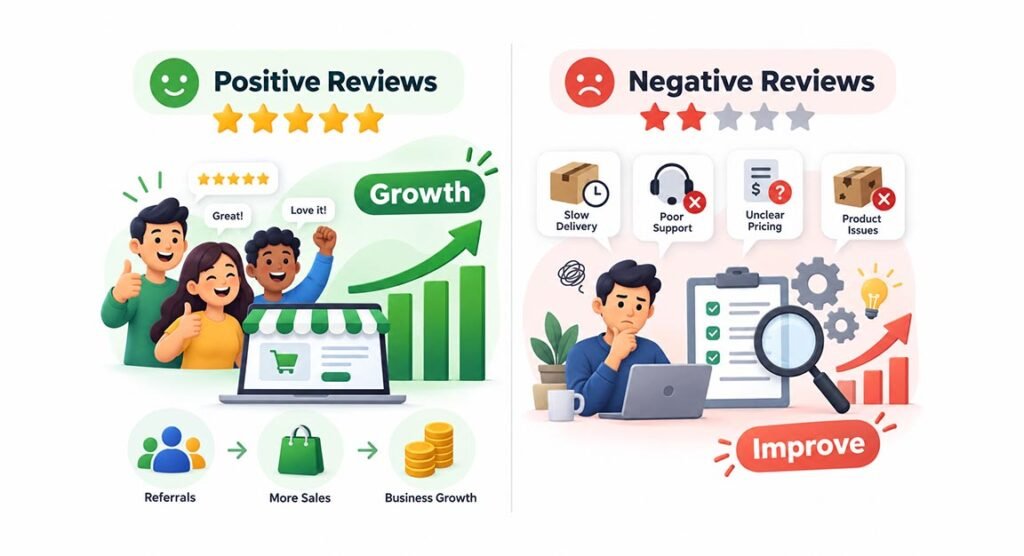
Positive feedback can support business growth in several ways. Good ratings may encourage more people to visit a website, call the company, or make a purchase. Happy customers may also recommend the business to friends and family. These recommendations can bring new customers without large advertising costs.
Negative feedback can also provide useful information. If many customers complain about slow delivery, poor support, unclear pricing, or product quality, management can identify the problem and improve it. Effective Business Reputation Management uses criticism as business data instead of treating every complaint as an attack.
How to Monitor Your Business Reputation Online
Businesses should know where customers are talking about them. Important places may include Google, Facebook, Instagram, LinkedIn, Reddit, industry directories, review websites, and forums. Companies can search their brand name regularly and use monitoring tools to find new reviews and online mentions.
A simple monitoring system should track the number of new reviews, average rating, common complaints, response time, and customer sentiment. Larger businesses may use reputation-management software to collect information from several platforms. Regular monitoring allows a company to notice small problems before they develop into serious reputation issues.
Best Ways to Respond to Customer Reviews
Businesses should respond to both positive and negative reviews. For positive feedback, a short thank-you message can show that the company values its customers. Replies should feel natural rather than using exactly the same message every time. Mentioning a small detail from the review can make the response more personal.
Negative reviews need extra care. The company should stay calm, acknowledge the customer’s concern, and offer help when possible. Avoid arguments, threats, or emotional replies. Remember that future customers can also see the response. A professional reply can sometimes improve trust because it shows that the company takes customer concerns seriously.
How to Build Trust Through Better Customer Experience
The strongest Business Reputation Management strategy starts with the real customer experience. A company cannot depend only on positive marketing. Customers expect businesses to provide what they promise. Clear prices, reliable products, honest policies, helpful employees, and good communication can all strengthen trust.
Businesses should also make it easy for customers to share feedback. After a purchase or completed service, customers can be invited to leave an honest review through email, SMS, a receipt, or a QR code. Companies should never pressure customers to leave only positive reviews. Genuine feedback is more useful and creates a more natural reputation.
Common Reputation Management Mistakes
One common mistake is ignoring negative feedback. A complaint that receives no response may make customers believe the company does not care. Another mistake is responding aggressively. A public argument can become more damaging than the original complaint and may be shared across social media.
Businesses should also avoid buying fake reviews. Fake ratings may create a short-term positive image, but they can damage trust if customers notice them. Companies should focus on collecting genuine feedback from real customers. Business Reputation Management works best when it is based on transparency rather than artificial ratings.
Tools and Metrics to Track Reputation Performance
Reputation tools can make monitoring easier. Some platforms collect reviews in one dashboard, send alerts when new feedback appears, track brand mentions, and help teams manage responses. Social listening tools can also identify discussions where people mention a company without directly tagging its account.
Useful reputation metrics include average star rating, review volume, response rate, response time, positive sentiment, negative sentiment, customer satisfaction, and repeat purchases. Businesses should compare these numbers over time. Improving from month to month is often more useful than trying to reach a perfect score immediately.
How to Handle Reputation Problems and Public Complaints
Every business can face a serious complaint or reputation problem. A customer story may become popular online, a product may fail, or incorrect information may spread. Companies should first collect the facts before making a public statement. Responding too quickly without correct information can make the problem worse.
A good crisis plan should explain who checks complaints, who approves responses, who communicates with customers, and when senior management becomes involved. If the company made a mistake, it should acknowledge the issue and explain what it is doing to fix it. Clear and honest communication can help rebuild confidence.
How Strong Reputation Supports Long-Term Business Growth
A strong reputation can support customer loyalty and long-term growth. People are more likely to return to companies they trust. Satisfied customers can also become useful promoters by sharing positive experiences with friends, family, and online communities. This can reduce the difficulty of attracting new customers.
Good Business Reputation Management creates a simple cycle: better service leads to happier customers, happier customers create stronger feedback, stronger feedback builds trust, and trust can lead to more sales. The goal is not to create a perfect online image. It is to build a reliable company whose public reputation matches the quality of its real customer experience.
FAQs
Why is online reputation important for a business?
Online reputation helps customers decide whether they can trust a company. Good reviews, accurate information, and professional responses can increase customer confidence.
Should a company reply to every review?
Businesses should try to respond to important positive and negative reviews. Replies show customers that the company pays attention to their experiences and feedback.
Can negative reviews help a business?
Yes. Honest negative feedback can reveal problems with products, delivery, pricing, staff, or customer support. Fixing these problems may improve future customer experiences.
What are the best places to monitor a company’s reputation?
Important platforms include Google, social media networks, review websites, business directories, forums, and industry-specific platforms where customers discuss companies.
How can a business build a better reputation?
Provide reliable service, communicate clearly, ask for genuine feedback, respond professionally to complaints, monitor online mentions, and improve problems that customers repeatedly report.